
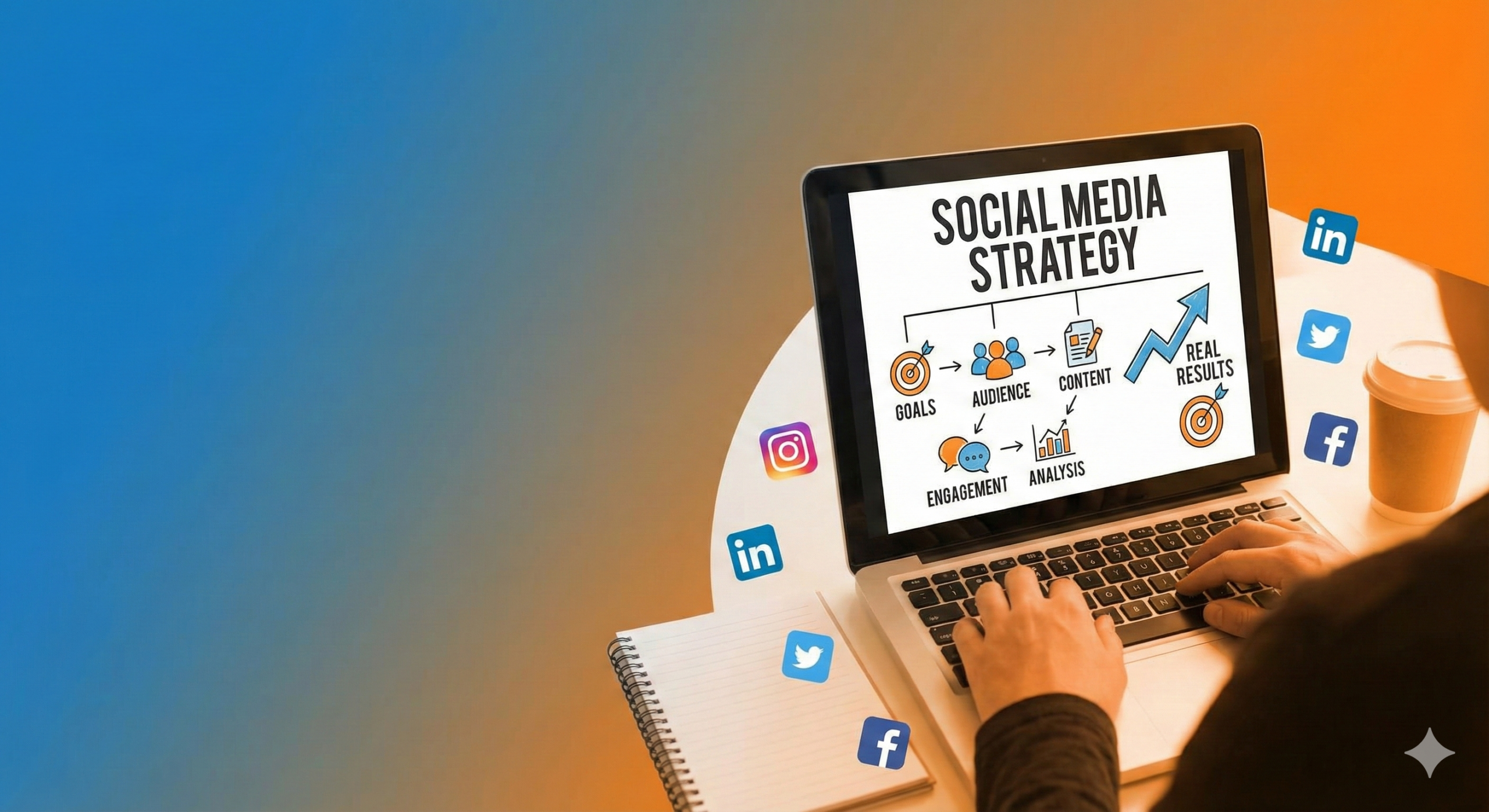

Social media isn’t just about posting content anymore. With over 4.9 billion active users worldwide, platforms have become the primary way businesses connect with their audience. But here’s the catch: random posts won’t cut it. You need a social media strategy that actually works.
Whether you’re a startup or an established brand, having a clear plan makes the difference between shouting into the void and building a community that supports your business. At Frame Makerzzz, we’ve seen firsthand how the right approach to social content (especially video) transforms engagement rates and drives business growth.
Let’s walk through how to build a winning social media strategy that fits your business goals.
Why Your Business Needs a Social Media Strategy
Think about this: 54% of people use social platforms to research products before buying. If you’re not showing up where your customers are looking, you’re leaving money on the table.
A solid social media strategy helps you:
- Connect with your target audience where they spend their time
- Build brand awareness without massive advertising budgets
- Generate leads and drive sales through authentic engagement
- Get direct feedback from customers about what they want
- Stay competitive in your industry
Without a plan, you’re just guessing. And guessing doesn’t grow businesses.
Step 1: Set Clear Goals That Match Your Business Objectives
Start with what you want to achieve. Your social media goals should tie directly to your business objectives, not exist in a bubble.
Common goals include:
- Increasing brand awareness by reaching new audiences
- Driving website traffic to your blog or product pages
- Generating qualified leads for your sales team
- Boosting customer engagement with your content
- Growing your community of loyal followers
Make your goals specific and measurable. Instead of “get more followers,” try “increase Instagram followers by 15% in the next quarter.” This gives you something concrete to track.
Step 2: Know Your Audience Inside and Out
You can’t create content that resonates if you don’t know who you’re talking to. Understanding your audience is the foundation of any successful social media strategy.
Ask yourself:
- Who are your ideal customers? (Age, location, profession, interests)
- Which social platforms do they use most?
- What problems are they trying to solve?
- What type of content do they engage with?
- When are they most active online?
Create audience personas that represent your typical customers. Give them names, backgrounds, and pain points. This makes it easier to create content that speaks directly to their needs.
For example, if Frame Makerzzz targets marketing managers at mid-sized companies, we know they’re looking for ways to explain complex products simply. That’s why explainer videos work so well for them.
Step 3: Choose the Right Social Media Platforms
Here’s a truth bomb: you don’t need to be on every platform. Focus your energy where your audience actually hangs out.
LinkedIn works best for B2B companies, professional services, and thought leadership content. It’s where decision-makers go to learn and network.
Instagram shines for visual brands, lifestyle products, and businesses targeting younger audiences. Stories and Reels drive massive engagement here.
Facebook still has the largest user base and works well for community building and targeting specific demographics through ads.
YouTube is perfect for long-form content, tutorials, and building authority through video. It’s the second-largest search engine after Google.
TikTok captures Gen Z and millennial audiences with short-form, authentic video content. Brands that embrace trends and creativity thrive here.
Pick two or three platforms to start. It’s better to be excellent on fewer platforms than mediocre everywhere.
Step 4: Create Content That Actually Engages People
Content is the heart of your social media strategy. But not all content performs equally.
In 2024-2025, these content types are driving the highest engagement:
Video content dominates everything. Short-form videos on Reels, TikTok, and YouTube Shorts get more engagement than any other format. Educational and entertaining videos drive 66% higher engagement than other content types.
Behind-the-scenes content builds trust by showing the human side of your business. People want to connect with real people, not faceless brands.
User-generated content serves as social proof. When customers share their experiences with your product, it’s more believable than anything you could say.
Educational content positions you as an expert. Share tips, how-tos, and industry insights that help your audience solve problems.
Interactive content like polls, quizzes, and Q&As boosts engagement and gives you direct feedback from your audience.
At Frame Makerzzz, we specialize in creating animated explainer videos and corporate videos that simplify complex messages. Video content gets shared 1,200% more than text and images combined, making it one of the most powerful tools in your social media strategy.
Step 5: Plan Your Content Calendar
Consistency beats perfection every time. A content calendar keeps you organized and ensures you’re posting regularly without scrambling for ideas at the last minute.
Your calendar should include:
- What you’re posting (the actual content or topic)
- Which platform are you posting on
- When you’re publishing it
- Who’s responsible for creating and posting it
- Any relevant hashtags or links
Plan at least two weeks, but stay flexible enough to jump on trending topics or timely opportunities. Mix promotional content with educational and entertaining posts. A good rule of thumb: 80% value, 20% promotion.
Step 6: Engage With Your Audience Actively
Social media isn’t a broadcast channel. It’s a two-way conversation. If you’re only posting without engaging, you’re missing half the point.
Respond to comments on your posts within a few hours. Answer questions in your DMs. Share and comment on content from your followers. Join relevant conversations in your industry.
This builds relationships and turns casual followers into loyal customers. Plus, social algorithms favour accounts that engage actively, meaning more people see your content.
Step 7: Track Your Results and Adjust
What gets measured gets improved. Track your social media metrics regularly to see what’s working and what isn’t.
Key metrics to monitor:
- Engagement rate (likes, comments, shares) shows how well your content resonates
- Reach and impressions tell you how many people see your content
- Click-through rate measures how many people take action
- Follower growth indicates if you’re attracting new people
- Conversion rate tracks how social media contributes to sales or leads
Most platforms have built-in analytics. Review your data monthly and adjust your social media strategy based on what you learn. If video posts get 3x more engagement than images, create more videos.
Step 8: Stay Current With Social Media Trends
Social media changes fast. What worked last year might not work today. Keep learning and adapting.
Current trends shaping 2024-2025:
- AI tools are helping create and optimize content faster
- Authenticity matters more than polished perfection
- Social listening helps brands understand what customers really want
- Nano-influencers drive higher engagement than mega-influencers
- Purpose-driven content connects with audiences on a deeper level
Don’t chase every trend, but stay aware of shifts in your industry. Test new features when platforms roll them out. Early adopters often get extra visibility.
Common Mistakes to Avoid in Your Social Media Strategy
Learning from others’ mistakes saves you time and frustration.
Posting without a plan leads to inconsistent content that doesn’t serve your goals. Create that calendar and stick to it.
Ignoring your analytics means you’re flying blind. Check your data regularly and make informed decisions.
Being too promotional turns people off. Focus on providing value first, selling second.
Not engaging with your audience makes you look like a robot. Social media is social. Act like it.
Spreading yourself too thin across too many platforms dilutes your efforts. Master a few platforms before expanding.
How Frame Makerzzz Helps Businesses Win on Social Media
Creating compelling video content shouldn’t be complicated. At Frame Makerzzz, we help businesses tell their stories through explainer videos, 2D and 3D animation, and corporate videos that capture attention and drive action.
Our clients use our videos across their social media channels to:
- Explain complex products in under 90 seconds
- Boost engagement rates by up to 300%
- Increase conversion rates on landing pages
- Build brand awareness through shareable content
- Train employees and educate customers
Good video content amplifies your social media strategy by making your message clearer, more memorable, and easier to share.
Building a successful social media strategy takes time, but the payoff is worth it. Start with clear goals, know your audience, create valuable content, and stay consistent. The businesses winning on social media right now aren’t the ones with the biggest budgets—they’re the ones with the clearest strategies and most authentic voices.
Ready to make your message clearer and more engaging? Visit Frame Makerzzz to see how video content can transform your social media presence.
FAQs
What is a social media strategy, and why do I need one?
A social media strategy is your roadmap for using social platforms to achieve business goals. You need one because posting randomly wastes time and money. A clear strategy helps you reach the right audience, create content they actually want, and measure your results. It turns social media from a time sink into a business asset that generates real returns.
How often should I post on social media?
Quality beats quantity, but consistency matters. Start with 3-5 posts per week on each platform you’re active on. LinkedIn performs well with 2-3 posts weekly, while Instagram and TikTok benefit from daily content. Monitor your engagement rates to find the sweet spot for your audience. Don’t sacrifice content quality just to post more often.
Which social media platform is best for my business?
It depends entirely on your audience. B2B companies typically see better results on LinkedIn, while visual brands thrive on Instagram. Research where your target customers spend time, test two or three platforms, and double down on what works. You’re better off excelling on two platforms than struggling to maintain five mediocre accounts.
How do I measure if my social media strategy is working?
Track metrics that align with your goals. If you’re building awareness, watch reach and follower growth. For engagement, monitor likes, comments, and shares. For conversions, track click-through rates and leads generated. Most platforms offer free analytics tools. Review your data monthly and adjust your strategy based on what the numbers tell you.
Can video content really improve my social media results?
Absolutely. Video content generates 1,200% more shares than text and images combined. Platforms like Instagram, LinkedIn, and Facebook prioritise video in their algorithms, giving it more organic reach. Explainer videos and short-form content consistently outperform other formats. If you’re not using video in your social media strategy, you’re leaving engagement on the table.

